

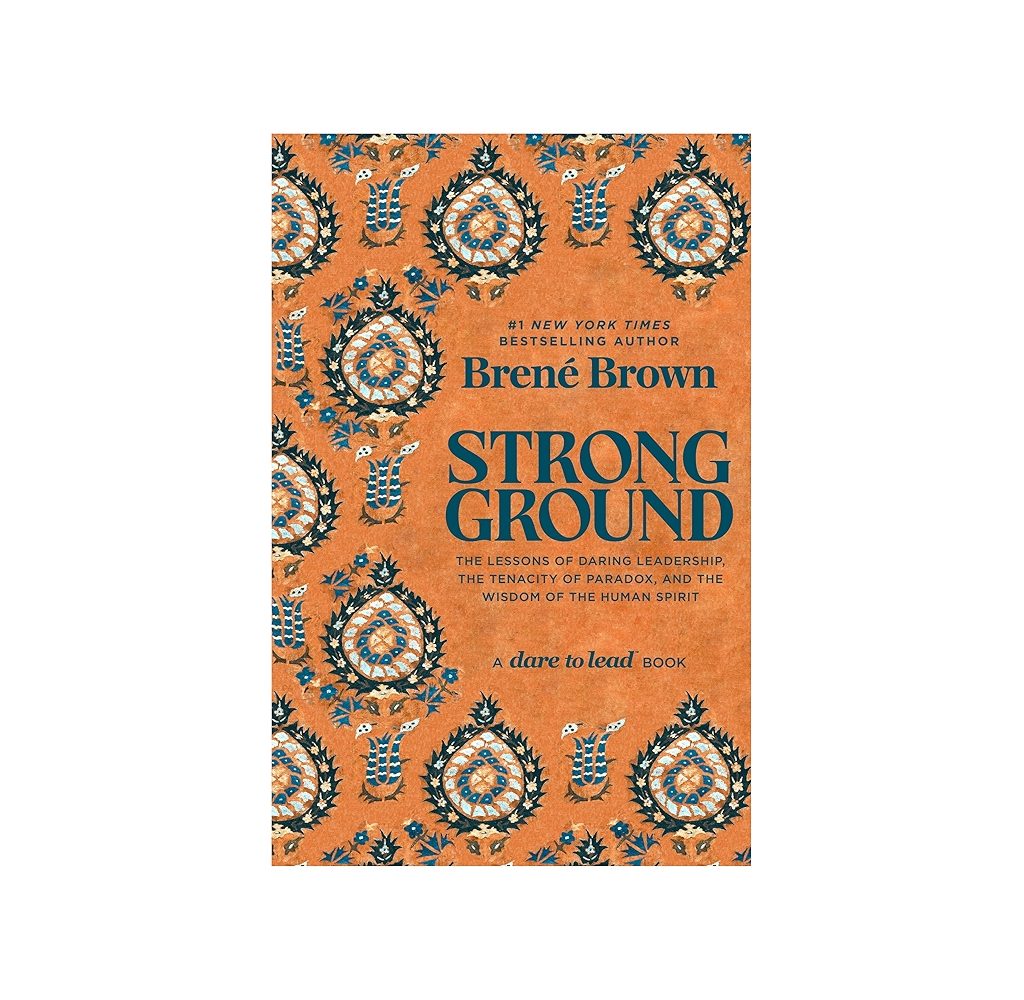
What happens to leadership when the ground beneath us doesn’t just shift, but seems to liquefy?
In her latest work, Strong Ground: The Lessons of Daring Leadership, the Tenacity of Paradox, and the Wisdom of the Human Spirit, Brené Brown moves past the foundational “dare to lead” concepts of the last decade to address the specific, high-velocity upheaval of our current moment. As someone who has spent years watching the tech industry pivot and the workforce struggle to find its footing, I found Brown’s central metaphor—the “athletic stance”—to be a refreshing departure from the usual corporate platitudes about resilience. She argues that finding your “strong ground” isn’t about being an immovable boulder; it’s about a posture of readiness that provides stability in a maelstrom while remaining poised for explosive change.
One of the most provocative subjects in the book is the Tenacity of Paradox. Brown challenges the binary thinking that often plagues executive suites—the idea that we must choose between operational discipline and creative innovation, or between vulnerability and decisiveness. She suggests that the most effective leaders don’t try to “resolve” these tensions but instead develop the capacity to hold both simultaneously. It’s in that uncomfortable middle ground, the “both/and,” where true strategic wisdom is born.
This leads directly into what she calls Grounded Confidence, a state rooted in self-awareness and the integration of our values. In a professional landscape where “bluster and hubris” are frequently mistaken for strength, Brown’s research-backed take on humility is a necessary corrective. She introduces the concept of “negative capability”—the ability to remain in uncertainty and doubt without “irritable reaching after fact and reason.” For the modern leader, this means having the confidence to say “I don’t know” while maintaining the discipline to keep searching for the right answer.
Perhaps the most practical takeaway is her distinction between Productive Urgency and Reactivity. We’ve all been in “hair on fire” environments where everything is a priority, which usually means nothing is. Brown identifies reactivity as a fear-based response that burns out teams and destroys culture. Conversely, productive urgency is rooted in smart prioritization. It requires the courage to say “no” to the noise so the team can focus on the signal, a skill set that is increasingly rare in our hyper-connected, AI-accelerated world.
Speaking of acceleration, Brown doesn’t shy away from the Discipline of Unlearning and Relearning. She argues that the toughest skill for today’s leader isn’t acquiring new knowledge, but the humility required to strip away legacy mindsets. As we integrate transformative technologies like AI, the “armor” we’ve used to protect our status or expertise often becomes the very thing that prevents us from evolving. To find “strong ground,” we have to be willing to “break our darlings”—the processes and beliefs that served us yesterday but are anchoring us to a sinking ship today.Ultimately, Strong Ground is an unflinching reminder that Reclaiming Focus Through Connection is our greatest competitive advantage. Brown posits that organizational transformation fails when we treat people as “variables” rather than the “ground” itself. When leaders foster “felt connection”—where employees feel seen and heard—the culture doesn’t just survive change; it helps drive it. If we want to lead in a way that honors the human spirit, we have to stop pretending that performance and wholeheartedness are mutually exclusive. They are, in fact, the two feet we need to stand firmly on our own strong ground.