

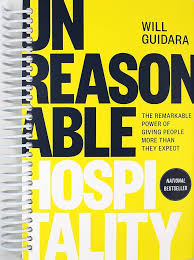
Ever wonder what happens when you stop looking at business as a series of transactions and start looking at it as a series of opportunities to make people feel seen?
Will Guidara’s Unreasonable Hospitality is essentially a manifesto for anyone who thinks “good enough” is a death sentence for a brand. While the book is rooted in the world of fine dining—specifically Guidara’s journey turning Eleven Madison Park into the best restaurant in the world—the entrepreneurial DNA of the story is universal. He argues that in a world where product quality has become a baseline commodity, the only way to truly differentiate yourself is through how you make your customers feel. For an entrepreneur, this is a pivot from being a service provider to being a “hospitality first” leader, where the “unreasonable” part refers to a level of dedication that doesn’t always make sense on a standard spreadsheet.
From a strategic standpoint, Guidara breaks down the “95/5 rule,” a brilliant bit of financial alchemy for any startup founder. He suggests managing your business with extreme discipline 95% of the time—watching every cent and optimizing every process—so that you have the resources to be “unreasonably” lavish with the remaining 5%. This isn’t just about spending money; it’s about creating “legends.” Whether it’s buying a $2 street taco for a table of world-class foodies or finding a specific toy for a guest’s child, these gestures create a brand loyalty that traditional marketing simply cannot buy.
The book also dives deep into the “adversarial” nature of many business-customer relationships and how to flip the script. Guidara emphasizes that as an entrepreneur, your job is to remove friction points before the customer even knows they exist. He advocates for “intentionality,” which in a tech or service startup means obsessive attention to the user journey. It’s the idea that every touchpoint is an opportunity to either build or erode trust. If you aren’t being intentional about your culture and your service, you’re essentially leaving your brand’s reputation to chance.
Leadership is the other major entrepreneurial pillar here. Guidara is candid about the transition from being a “doer” to a “leader,” highlighting that you can’t provide world-class hospitality to your guests if you aren’t first providing it to your team. He pushes back against the old-school, “top-down” kitchen hierarchy in favor of a collaborative environment where every employee is empowered to be a “creative” in their own right. For a founder, this means hiring for empathy and then getting out of the way so your team can deliver those “magic moments” autonomously.
Ultimately, Unreasonable Hospitality serves as a reminder that the most successful businesses are often those that lean into the human element rather than trying to automate it away. Guidara proves that being “unreasonable” isn’t about being irrational; it’s about having a higher standard for the human experience than your competitors do. It’s a blueprint for building a business that people don’t just use, but one they actually love. In a market saturated with “disruptors,” Guidara reminds us that the most disruptive thing you can do is actually care.
If you decided to apply the 95/5 rule to your own project today, what is the one “unreasonable” gesture that would make your clients talk about you for years?