
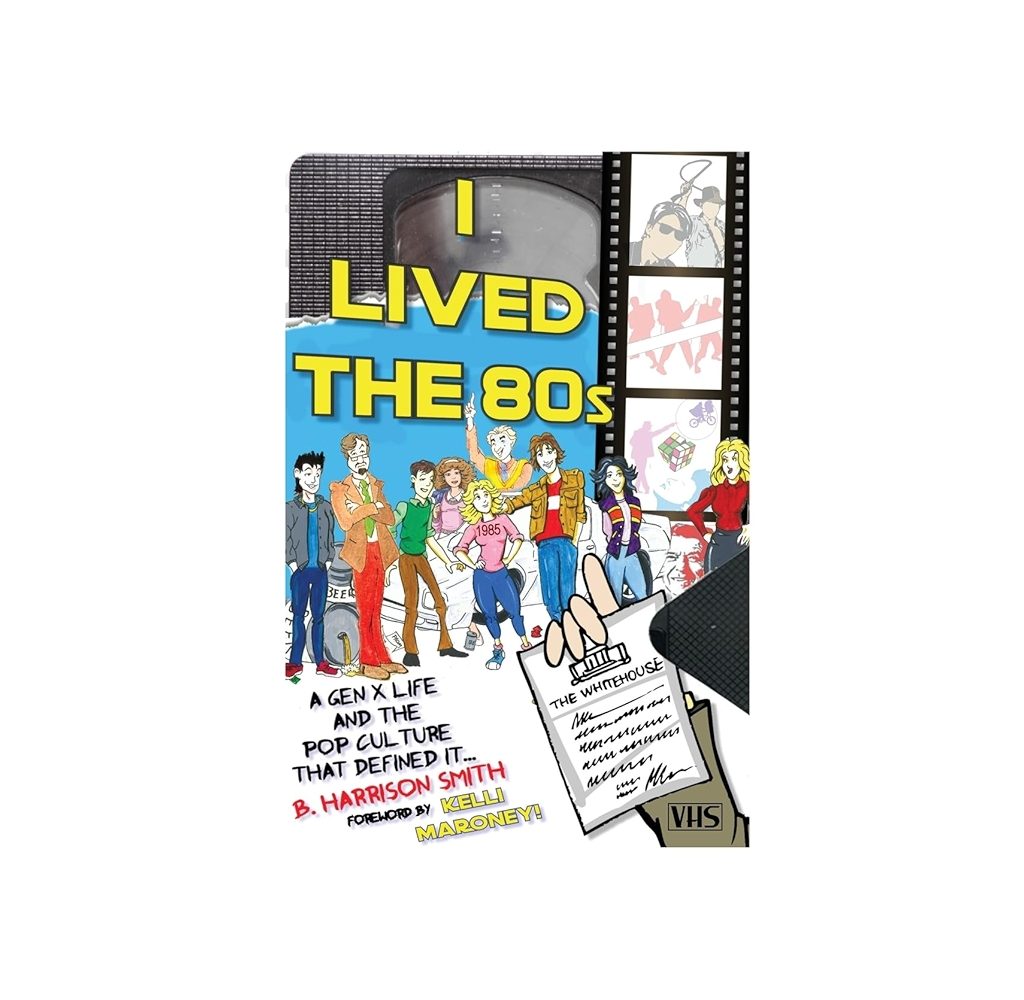
What does it mean to be Generation X—the so-called “forgotten generation” wedged between the Boomers and Millennials? How did an entire cohort of latchkey kids, raised on MTV and arcade games, navigate a decade defined equally by neon optimism and dark undercurrents of AIDS, crack epidemics, and Cold War anxiety? B. Harrison Smith, a horror filmmaker by trade and self-described “Monster Kid,” tackles these questions in I Lived the 80s, a memoir that doubles as cultural archaeology. Smith’s Gen X credentials are impeccable: he made his own meals after school, played miles from home with no way to be reached, broke bones jumping bike ramps, and survived high school social hierarchies divided between nerds, preps, stoners, and jocks. Rather than offering nostalgic veneration of the decade, Smith presents an unvarnished personal chronicle interwoven with pop culture landmarks, demonstrating how the best and worst of the era shaped the generation that came of age during it.
The heart of I Lived the 80s lies in Smith’s refusal to sanitize either his own teenage experience or the decade’s darker realities. While he catalogs the cultural touchstones Gen Xers hold dear—MTV’s music videos, Steven Spielberg and Michael Jackson at their peak, VHS versus Beta debates, mall culture, and the unwritten rule that you didn’t mediate with bullies but handled them directly—he punctuates this with the parenthetical reminder: “Oh yeah, we also had AIDS, terrorism, crack, racism, homophobia, subway shootings, cocaine, corrupt politicians, pollution, book banning, political correctness, TV preachers, climate change, stranger danger and Can’t Stop the Music.” This dual consciousness—simultaneously celebrating penny loafers and big hair while acknowledging the era’s profound social crises—prevents the book from devolving into simple nostalgia. Smith positions himself as “The Weird Kid, The Horror Movie Kid,” and his fascination with the genre becomes the lens through which he processes both personal trauma and cultural anxieties.
Smith’s inclusion of his own journal entries adds raw emotional texture to the narrative, though this choice proves divisive. These unfiltered glimpses into his teenage psyche—his struggles with identity, his navigation of being an LGBTQ individual in an often hostile environment, his desperate attempts to fit into rigid social hierarchies—create uncomfortable moments of vulnerability that some readers find compelling and others dismiss as self-indulgent. The entries serve a purpose beyond personal catharsis: they document the internal life of a generation that famously learned to mask emotion and “deal with it” rather than seek validation or therapy. Smith’s willingness to expose his younger self’s insecurities and pretensions becomes an act of generational honesty, even when it makes both author and reader squirm.
The book’s most pointed cultural criticism emerges in Smith’s takedown of Stranger Things, which he argues exemplifies a fundamental problem: a contemporary audience that neither knows nor cares about the actual 1980s the show allegedly depicts.His frustration stems not from proprietary gatekeeping but from what he sees as a broader cultural amnesia—younger generations consuming sanitized, aesthetically pleasing versions of the decade without understanding the context, contradictions, or actual lived experience behind the visual signifiers. He diagnoses this as an “Emperor’s New Clothes situation” where few want to acknowledge that Stranger Things offers nothing new, original, or fresh, yet audiences hail it as groundbreaking precisely because they lack historical reference points. This critique cuts deeper than entertainment criticism; it’s about how generational memory gets commodified and repackaged for consumption by those who weren’t there.
The book’s reception has been remarkably polarized in ways that reveal as much about readers as about the text itself. Fellow Gen Xers who share Smith’s formative experiences respond with visceral recognition and gratitude—finally, someone who remembers not just the artifacts but the texture of growing up in that particular moment. They appreciate his meticulous attention to detail, his ability to anchor pop culture moments to specific news events and personal memories, creating a comprehensive tapestry rather than a greatest-hits compilation. These readers find validation in Smith’s unapologetic embrace of the generation’s rougher edges: the unsupervised freedom, the politically incorrect humor, the expectation of self-sufficiency that could be both empowering and neglectful depending on one’s circumstances.
Conversely, critics—particularly those from younger generations or those with different 1980s experiences—find the book alternately tedious and troubling. Some object to what they perceive as excessive focus on Smith’s personal life rather than broader cultural analysis, wishing for less memoir and more social history. Others take issue with the book’s occasional romanticization of aspects of Gen X childhood that were actually symptoms of neglect or reflect problematic attitudes about gender, sexuality, and race that should be interrogated rather than celebrated. The tension here is real: how does one honestly document a formative era without either airbrushing its failures or performing contemporary moral superiority? Smith’s approach—largely just laying out his experience as it happened—sidesteps this question rather than resolving it, leaving readers to draw their own conclusions about what the decade’s legacy means.What makes I Lived the 80s valuable beyond its immediate Gen X audience is its demonstration of how pop culture functions as both escape and mirror. Smith’s detailed recollections of specific movies, albums, and television shows aren’t just nostalgic cataloging—they’re evidence of how a generation processed enormous social change and personal anxiety through entertainment. His journey from obsessed Monster Kid to professional horror filmmaker illustrates how the cultural products we consume in youth can provide both comfort and roadmap. The book ultimately succeeds not as comprehensive social history or as perfectly crafted memoir, but as an honest, occasionally messy document of one person’s passage through a decade that continues to cast long shadows over American culture. Whether readers find it fascinating or frustrating depends entirely on their relationship to the era and their tolerance for Smith’s particular voice—unfiltered, defensive, sentimental, and defiantly unreconstructed.